Turning science into funded, operating technology.
A multidisciplinary team of engineers, research scientists and commercialization advisors — bridging R&D and industry across bioenergy, biomass, biofuel and Sustainable Aviation Fuel systems, from patent to pilot to profitable operation.









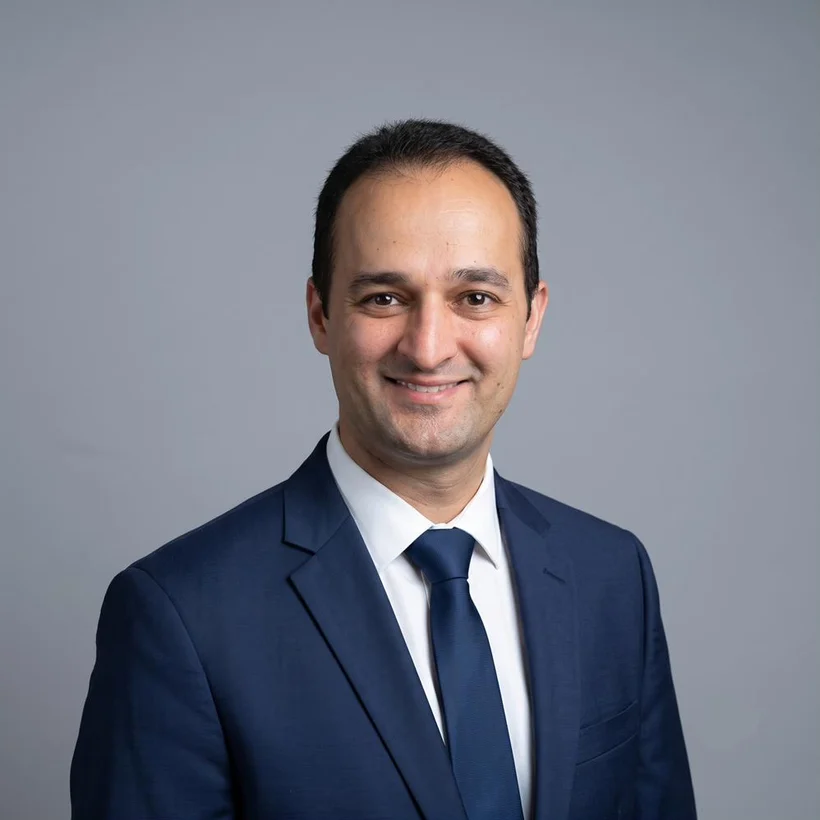
Dr. Hamid Rezaei
research scientists and commercialization advisors
Circular Economy
Biological Engineering
Why I founded Nexen Biosystems.
I have spent fifteen years watching sound technologies fail for reasons that had nothing to do with the science. The chemistry worked. The pilot data held. What defeated them was process economics that would not close at scale, a funding programme approached at the wrong stage, and — more often than either — feedstock never properly prepared for the process it was feeding. Solving that reliably takes more than one person: Nexen brings together process and chemical engineers, research scientists, analytical specialists and commercialization advisors, assembled around each engagement rather than billed as a fixed roster regardless of relevance — the research department few companies in this sector can justify keeping on staff, available for exactly as long as you need one.
Every engagement is framed commercially, because that is how these decisions are actually made. What does the capital plan look like if yield lands ten percent below target? Which cost items will a programme fund, and which will you carry regardless? Our team has secured over $10M in grant and non-dilutive funding and built the models that justified it, so we account for cash flow and timing alongside the engineering — including knowing when the right answer is that a project should not proceed as designed.
Specialist services, scoped directly with our team.
Tell us about your project, secure the engagement, and book a meeting with our team to define the scope. Each service begins with a short intake so the first conversation starts with substance rather than background.
Feasibility Study
An independent assessment of whether your project works technically and economically — process, cost and the conditions under which the numbers hold.
- Technical and process feasibility
- Techno-economic analysis (TEA) and life cycle assessment
- Key risks and the assumptions they rest on
Biomass Feedstock Engineering
Understand what your feedstock is and how it will behave in your process, engineered to suit the process it feeds.
- Composition, energy content and durability analysis
- Conversion and handling behaviour
- Specification against target standards
Strategic Advisory & Business Development
Bring Nexen onto your advisory board — senior technical and commercialization judgement without a full-time hire.
- Technical advisory — process, scale-up, safety, feedstock
- Commercialization — IP, market entry, production readiness
- Terms agreed case by case
Applied R&D
Industry-focused research programmes that answer a defined technical question, from experimental design through pilot validation.
- Experimental design and pilot validation
- Data packages built for funders, partners and regulators
- Findings translated into a go/no-go recommendation
Advanced Simulation & Technology Design
Rigorous modelling of conversion systems and equipment design — proving performance before capital is committed.
- Thermal, chemical and biomass conversion modelling
- Process flow and equipment design
- Performance validated before capital is committed
Scale-Up & Optimization
Pilot-to-commercial scale-up planning and process optimization — closing the gap between demonstrated and operating performance.
- Pilot-to-commercial scale-up planning
- Process optimization across drying, densification and conversion
- Root-cause analysis of underperformance
Process Safety & Regulatory Compliance
PSM framework implementation and risk assessment across environmental, safety and certification requirements.
- PSM framework implementation
- HAZOP / LOPA / Dust Hazard Analysis (DHA)
- Support through permitting, audit or incident follow-up
Grant & Funding Strategy
Start with our scored Funding & Readiness self-assessment to see which programs fit. Once you have your report, book a meeting if you need an ongoing funding strategy.
- Scored and matched against 90+ funding programs
- Grant acquisition and cost-share structuring
- Investor-ready commercialization roadmaps
Find the funding programs built for your stage.
Answer a short set of questions about your team, technology, financial position, and stage. Your report is then prepared specifically for your company — scored against your own answers, with programs matched to your sector, stage and region. Not a generic list.
Funding & Readiness Finder
A four-step questionnaire assesses your team, project, financial situation, and stage — then generates a scored business assessment and a ranked list of the funding programs most appropriate for your company right now.
- Commercialization readiness score
- Gap analysis — what's missing before you're funding-ready
- Ranked, matched grant & funding programs
- Recommended next steps
Learn in depth with full, self-paced certificate courses.
Structured technical training built to the same standard as our advisory work — feedstock engineering, process design and system evaluation, worked through in detail rather than summarized. Progress is saved automatically in your browser, so you can leave a course and pick up exactly where you stopped, and each course closes with a knowledge-check quiz and a Nexen Biosystems certificate of completion.
Wood Pellet Engineering & Bioenergy Systems
A rigorous, industry-focused course in wood pellet engineering: classify woody feedstocks, apply global fuel-quality standards, and design the pelletization and thermal-conversion systems behind modern bioenergy plants — with the analytical tools to evaluate performance financially and environmentally.
- Classification & properties of wood biomass feedstocks
- Global fuel quality standards & certification gap analysis
- Feedstock cleaning, preparation & drying engineering
- Engineering physics of pelletization & briquetting
- Thermal conversion, CHP integration, TEA & LCA
Advanced Waste-to-Fuel & Waste-to-Energy Systems
A full technical walkthrough of the municipal solid waste value chain: analyze, design and optimize the process behind turning MSW into refuse-derived fuel — from feedstock separation and densification through incineration, pyrolysis, gasification and project evaluation. Focused on MSW and RDF/SRF systems.
- MSW characterization & waste-to-fuel classification
- RDF/SRF production: separation, cleaning & densification
- Incineration & mass-burn fundamentals
- Advanced pyrolysis & gasification of MSW/RDF
- WtE subsystems, emissions control & project evaluation
Advanced Analysis of Drying Systems for Biomass Processing
A rigorous course in industrial biomass drying: size, specify and assess rotary drum, belt and fluidized bed dryers using real mass and energy balances, empirical correlations and safety frameworks — with the tools to defend technology choices, troubleshoot operations and drive process improvements in bioenergy and pellet production.
- Physicochemical properties & moisture behavior of biomass
- Mass & energy balances for biomass drying systems
- Rotary drum, belt & fluidized bed dryer design and sizing
- Comparative technology selection & economic analysis
- Fire, dust-explosion risk & process troubleshooting
Advanced Drying Technology Selection & Cost Justification for Heat-Sensitive Products
Select, size and economically justify drying technologies for heat-sensitive food, pharmaceutical and nutraceutical products — covering convective, microwave, infrared, vacuum/freeze, drum and spray drying, with the technical and economic case to defend your choice under GMP and regulatory constraints.
- Oven, tray, belt & fluidized bed drying fundamentals
- Microwave, infrared, vacuum & freeze drying mechanisms
- Spray, drum & refractance window drying design
- Technology selection for food, herbal & pharmaceutical products
- Cost estimation & economic justification of drying systems
Payment is processed securely through Stripe. Once payment is confirmed, you'll be given access to the course, which opens in a new tab and runs entirely in your browser. Your progress is saved automatically on your specific device and browser.
Questions? Reach out at hamid@nexenbiosystems.com
Common questions, answered.
What funding is available for bioenergy and biomass projects in Canada?
Canadian bioenergy and biomass projects can access federal programs including NRC IRAP, the NRCan Clean Fuels Fund, SR&ED tax credits and the clean-economy investment tax credits, alongside provincial programs and regional development agency funding. Wage subsidies, repayable contributions and lending instruments each fund different cost items, so the strongest outcomes usually stack several programs across one project rather than relying on a single application. Our Funding & Readiness Finder matches your project against more than 90 programs by sector, technology readiness, business stage and region.
What does biomass characterization involve?
Biomass characterization establishes what a feedstock actually is and how it will behave in your process. Typical analyses include moisture and ash content, TGA analysis, elemental and chemical analysis, grinding properties, bulk density, flowability, drying behaviour, pelletization trials, pellet durability and density, self-heating and off-gassing. The results determine equipment selection, product specification and whether the material meets the standard you are targeting.
What is a techno-economic analysis (TEA)?
A techno-economic analysis models the process economics of a technology — capital and operating cost, mass and energy balance, and the conditions under which the project becomes commercially viable. It is normally required before major funding applications or investment decisions, and it is where many otherwise-promising technologies are found to need a different scale, feedstock or configuration.
What technology readiness level do funding programs require?
Most competitive innovation programs target TRL 4 to 8. Below TRL 4, research-partnership funding through university collaboration — NSERC Alliance, Mitacs, college applied research — is usually the realistic route. Capital and deployment programs generally require TRL 7 or above, along with evidence that you can finance and operate the asset rather than only develop the technology.
How long do funding applications take to be decided?
It varies widely by instrument. Wage subsidies and continuous-intake provincial programs can decide within one to two months. Federal contribution programs typically run three to nine months from application to decision, and major capital programs can take a year. Tax credits are claimed retroactively at filing rather than applied for. Because grant timelines run in months, a company with short runway should sequence fast instruments first — our assessment compares each program's review time against your runway.
Do you work with companies outside Canada?
Yes. Advisory services — feasibility studies, biomass characterization, TEA and LCA, process safety management — are available internationally. The funding assessment covers Canadian federal and provincial programs as well as United States federal programs including DOE BETO, SBIR/STTR and USDA REAP and value-added producer grants.
Let's discuss your project.
Whether it's a funded engagement, a commissioned report, a partnership, or a question about where your technology stands — our team will get back to you personally.
Book a Meeting Directly →